What Makes Our Program Different
Choose Life Ministry was not built to be another program on a list. Christ-centred residential care, safe community, time, and truth for the whole person.

When people first hear about Choose Life Ministry, they often ask what makes our program different. It is an important question. There are many kinds of addiction recovery programs, counselling services, treatment centres, support groups, and crisis responses. Each one may have a meaningful role to play. We are grateful for every faithful work that helps people move toward safety, sobriety, healing, and hope.
But Choose Life Ministry was not built simply to be another program on a list. Our work is rooted in a specific calling: to provide Christ-centred residential care for women who need time, structure, truth, safety, and support as they heal from addiction, trauma, shame, and life-controlling struggles. We believe recovery is not only about stopping a behaviour. It is about restoration of the whole person.
One of the things that makes our program different is that we are residential and deeply relational. Women do not come for a single appointment and then leave to face everything alone. They enter a structured environment where daily rhythms matter. Meals, teaching, prayer, chores, conversations, counselling connections, rest, accountability, and community all become part of the healing process.
This matters because addiction and trauma often shape daily life, not only isolated moments. A woman may know she needs help, but still struggle when she returns to the same environment, the same pressures, the same triggers, and the same patterns. Residential care creates space away from the noise and instability. It gives time for new habits to form, for truth to be repeated, and for trust to begin growing again.
Our program is also different because it is intentionally Christ-centred. We believe Jesus Christ is not an optional addition to recovery. He is the source of true hope, forgiveness, identity, and transformation. We do not believe people are helped most deeply by shame, fear, or behaviour management alone. We believe women need to encounter the grace and truth of Christ in the very places where addiction and trauma have spoken lies.
This does not mean we ignore practical needs. Faithfulness to Christ should make us more honest, not less. Women need structure. They need accountability. They need wise boundaries. They need emotional support. They may need counselling, medical care, safe relationships, life skills, and help rebuilding practical areas of life. Christ-centred care does not avoid these realities. It brings them under the hope and lordship of Jesus.
Another difference is that we care about identity. Addiction often tells a woman who she is. Trauma may tell her she is damaged. Shame may tell her she is beyond repair. Failure may tell her she will never change. But the gospel tells a truer story. A woman is made in the image of God. She is seen by Him. She is not beyond His reach. In Christ, there is a new name, a new foundation, and a new way forward.
This is why our program does not only ask, "How do we stop this behaviour?" We also ask, "What has this woman come to believe about herself, about God, about others, and about her future?" Lasting change often requires truth to reach beneath the surface. When the lies beneath addiction begin to be exposed, the work of healing can go deeper.
We also believe time matters. Quick interventions may be necessary in a crisis, but long-term healing usually requires more than a short burst of help. Recovery is not usually a straight line. It involves learning, unlearning, grieving, confessing, rebuilding, practicing, failing, returning, and continuing. A woman needs time to be taught, time to be supported, time to face hard things, and time to experience a different way of living.
That is one of the reasons our residential program is so important. Time allows staff to see patterns that may not appear in one conversation. It allows teaching to move from information into practice. It allows women to experience community, not only hear about it. It allows accountability to become part of daily life. It allows trust to be tested and slowly rebuilt.
Our program is also different because we do not separate spiritual healing from practical responsibility. Grace is central, but grace is not an excuse to avoid responsibility. Women are invited to receive the mercy of Christ while also learning to tell the truth, accept consequences, make amends where appropriate, respect boundaries, and practice faithful daily choices.
This balance matters. Truth without grace can crush a person who already feels buried by shame. Grace without truth can leave destructive patterns untouched. In Christ, grace and truth belong together. He does not shame people into healing, but He also does not leave them in bondage. He calls them into the light where real restoration can begin.
Another difference is the role of safe community. Many women arrive carrying deep loneliness. Some have been surrounded by people but have not felt truly known, safe, or loved. Addiction often grows in secrecy. Trauma often teaches people to protect themselves by hiding. Healing requires a different kind of community, one where truth can be spoken, tears can be seen, and women can learn that they do not have to carry everything alone.
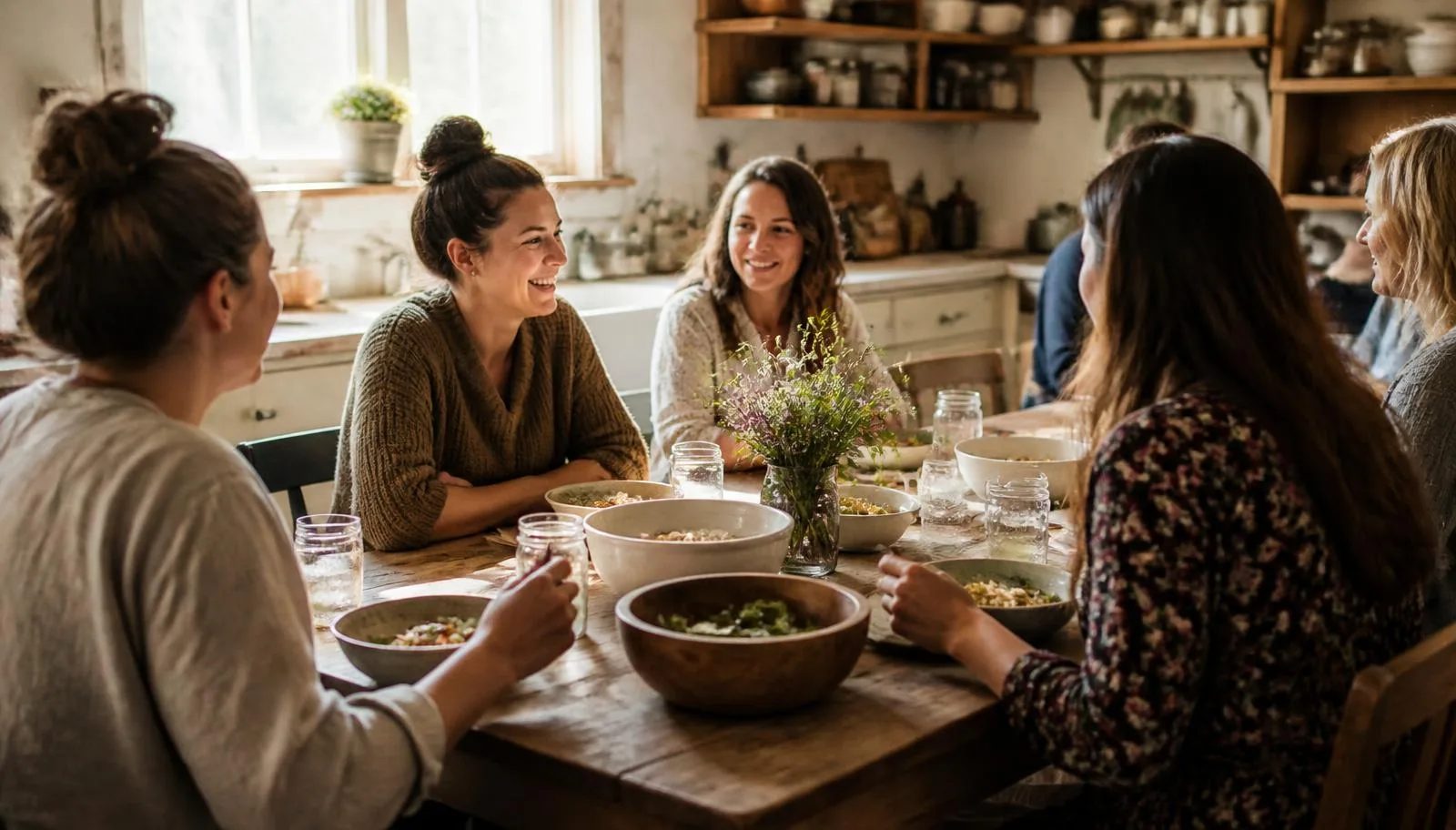
At the Homestead, community is not only a concept. It is lived out in ordinary moments. Staff and residents share meals. Conversations happen around tables, in living rooms, during chores, on walks, and in teaching times. These moments may look simple, but they are often deeply important. Belonging is not rebuilt only through formal lessons. Sometimes it begins when someone is treated with dignity in the middle of an ordinary day.
Our staff also make the program different. The work requires more than supervision. It requires presence, patience, discernment, consistency, and compassion. Staff are there for the daily routines, the hard conversations, the quiet concerns, the moments of discouragement, and the small victories that may not be visible to others. This kind of care is demanding, but it is also where much of the ministry happens.
We are not a perfect ministry, and we do not pretend to be. We are continually learning, growing, improving, and depending on the Lord. But we are committed to providing a place where women are treated as people made in the image of God, not as problems to be managed. We want the atmosphere of our program to communicate that truth, dignity, responsibility, and hope can exist together.
Another important difference is that we recognize families are affected too. Addiction does not wound only the person who is using substances. It affects parents, spouses, children, siblings, friends, churches, and communities. Families often need wisdom, encouragement, and support as they learn how to love without enabling, set boundaries without hatred, and hope without trying to control the outcome.
Our desire is not only to see women complete a program. We want to see lives restored, families strengthened where possible, churches equipped to respond wisely, and communities reminded that no life is beyond the reach of Jesus. Completion matters, but transformation is deeper than attendance. We are praying for lasting fruit.
Our program is also different because it is supported by a wider ministry community. Choose Life Ministry exists because people pray, give, volunteer, refer, encourage, and stand with us. Donors help make care possible. Churches help connect people to support. Communities help carry the work. This is not just an organizational effort. It is a shared mission.
That support matters because the cost of residential care is significant. Staffing, food, utilities, maintenance, program materials, transportation, administration, and daily care all require resources. But behind every practical cost is a person. Behind every budget line is a woman who needs a safe place to heal, a family that needs hope, and a ministry opportunity that matters deeply.
What makes our program different is not one single feature. It is the combination of Christ-centred truth, residential structure, relational care, time, accountability, safe community, practical support, and hope for the whole person. It is the belief that healing must reach deeper than behaviour and that Jesus is able to restore what addiction and trauma have damaged.
We know this work is not easy. The stories are often heavy. The needs are real. The road can be long. But we also believe the gospel is good news for broken places. We believe Jesus is near to the brokenhearted. We believe He can renew minds, restore dignity, rebuild lives, and give hope where hope has felt impossible.
At Choose Life Ministry, we are not simply trying to help women stop something destructive. We are asking God to help them begin again. We want them to know who they are in Christ. We want them to experience safe community. We want them to learn truth, responsibility, and grace. We want them to discover that their story is not over.
That is what makes our program different. It is not just a place to get away from addiction. It is a place to move toward healing, truth, community, responsibility, and the transforming hope of Jesus Christ.