What It Means to Be a Homestead
Homestead for Hope is not a detox, treatment centre, or institution. It is a trauma healing homestead where women find space, structure, faith, and support for lasting change.
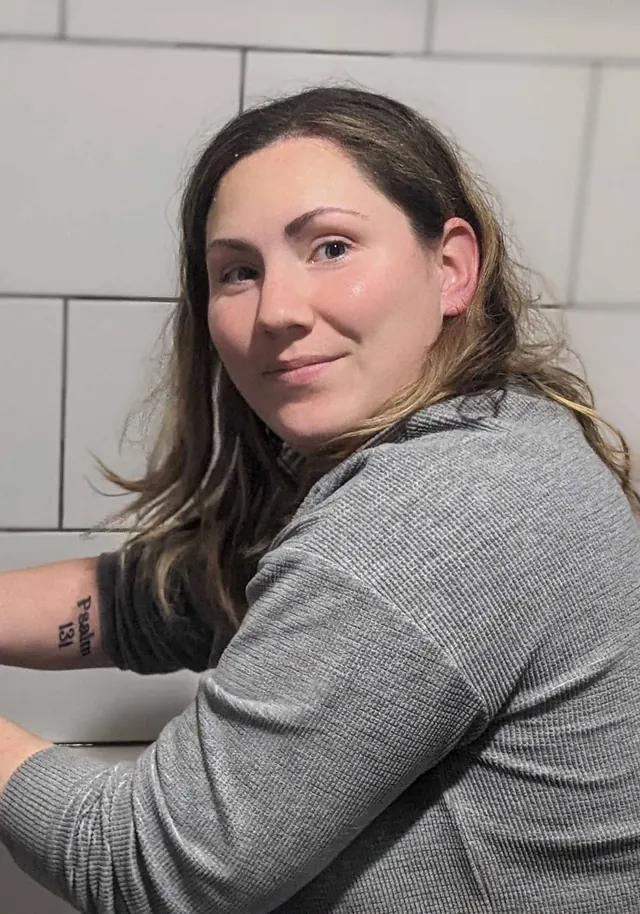

When someone is first learning about Homestead for Hope, I am often asked what kind of place we are. People have heard that women live here for several months, that we work with trauma, addiction, mental health, and difficult life circumstances, so naturally they try to place us into a category they already understand. Are we a treatment centre? Are we a detox? Are we a mental health facility or some kind of rehabilitation program?
I understand why people ask those questions because I spent many years working as an LPN in mental health and addictions before becoming the Programming Director here. I have worked around clinical mental health care and addiction treatment, and I have seen how important those services can be. There are moments in a person's life when medical care is not simply helpful but necessary, and part of caring for someone well is knowing when she needs something we are not designed to provide.
Homestead for Hope is different from those environments. We describe ourselves as a **trauma healing homestead**, and I have come to appreciate how much each of those words matters.
## Understanding the Difference
A detox centre is primarily concerned with helping someone safely come off alcohol or drugs. Depending on what a person has been using, how much, and for how long, withdrawal can involve significant medical risk. In those circumstances, monitoring, medication, nursing care, and access to physicians can be extremely important, because the immediate concern is getting someone through withdrawal safely.
An addictions treatment centre typically moves beyond that initial physical stabilization and begins working more directly with substance use. There may be counselling, education, group work, relapse prevention, recovery planning, and other structured programming designed specifically around addiction. Some programs are residential and some are not, but the common focus is helping people understand and address their relationship with substances and develop the tools needed for recovery.
Mental health facilities can serve a much broader range of needs. Someone may be receiving care for depression, anxiety, trauma-related conditions, eating disorders, severe emotional distress, or any number of other mental health concerns. Depending on the type of facility, that care may involve nurses, counsellors, psychologists, psychiatrists, medications, assessments, therapy, and treatment planning.
A psychiatric ward has another role again. When someone is acutely unwell, experiencing psychosis, at significant risk of harming herself, or unable to remain safe because of her mental state, hospital-level psychiatric care may be exactly where she needs to be. In those situations, the clinical nature of the environment is appropriate because stabilization and safety have to come before almost everything else.
I have tremendous respect for those kinds of services because I have seen what happens when people need them. I have also seen the other side of the story, where the immediate crisis passes and a person is technically stable, but very little about the deeper pain she carries has changed. Someone can finish detox and still be carrying trauma, leave a hospital and still be overwhelmed by her life, or stop using a substance and discover that all of the things she had been trying not to feel are still waiting for her.
That is closer to the space in which Homestead for Hope exists.
## Why We Call It a Homestead
We could call ourselves a facility, but I do not think that word describes what happens here very well. A facility sounds like somewhere you are processed through, treated, discharged from, and sent home. There are places where that structure makes sense, but when we talk about the Homestead, I want people to picture something very different.
We are quite literally a home in the country, away from town and surrounded by the kind of quiet that can be difficult to find anywhere else. When a woman arrives, she walks into a kitchen, a dining room, bedrooms, a living room, and ordinary shared spaces. There are staff here and there is a program to follow, but there are also meals to prepare, dishes to wash, coffee to drink, laundry to do, conversations around the table, and stretches of the day that simply feel like living in a house with other people.
The fact that we are in the middle of nowhere is actually very important to me. There is a stillness here that is hard to explain until you have spent some time in it, especially if your life has been filled with chaos. There is not somewhere to go every evening, another distraction around every corner, or an endless stream of activity constantly asking for your attention.
For some women, that quiet feels like relief from the moment they arrive. For others, it can be surprisingly difficult because noise and chaos can become very effective ways of avoiding what is happening inside us. When everything finally becomes still, sometimes you begin hearing the thoughts, memories, fears, grief, and questions that have been drowned out for years.
I do not think healing requires living in the country, but I do think our environment gives women something that is becoming increasingly rare: room to stop. There is time to think, time to talk, time to pray, time to become uncomfortable, and time to discover that discomfort does not always need to be escaped from.
## What We See Is Not Always the Problem
My nursing background taught me to pay attention to symptoms, but it also taught me how important it is not to confuse a symptom with the whole person. Addiction is often very visible, and so are things like self-harm, anxiety, depression, destructive relationships, anger, isolation, or behaviour that seems completely irrational to the people watching from the outside. Those things need to be addressed, but they also make me curious about what has happened underneath them.
When I sit with someone who has spent years using drugs or alcohol, I certainly care about the substance use. At the same time, I also want to understand what being sober asks her to feel. I want to understand what happened in her life before the addiction, what she believes about herself, what she is frightened of, what she has learned about relationships, and what she has been trying to survive.
Sometimes we discover abandonment underneath the addiction, grief underneath the depression, betrayal underneath the need to control everything, or years of instability underneath a person's inability to trust. A behaviour can be harmful and still have an understandable beginning. Something that is destroying a person's life today may once have been the only way she knew how to endure what was happening to her.
Understanding that does not mean removing responsibility. This is an important distinction, because empathy can sometimes be misunderstood as never confronting someone with the consequences of her choices. At the Homestead, we can acknowledge that you did not choose what happened to you while still believing that you are responsible for what you choose to do next.
That balance is at the heart of how I want women to experience this place. I want them to know that we are genuinely interested in their story and that we are not afraid of the hard parts, but I also want them to know that we believe they are capable of growth. I do not think it is loving to look at someone who can change and quietly decide that her trauma means we should never expect anything from her.
## Living Together Becomes Part of the Work
One of the things that makes a homestead different from attending appointments or classes is that you cannot separate programming from everyday life. We can spend the morning talking about communication, healthy boundaries, emotional regulation, forgiveness, or responsibility, and then by lunchtime something happens that gives everyone an opportunity to practise it. That is simply what happens when people live together.
Maybe someone did not follow through on a chore she agreed to do, or another resident said something that hurt. Someone might feel excluded, misunderstood, corrected unfairly, or frustrated because plans changed. Those moments may look small from the outside, but they can touch wounds that are anything but small.
That is where some of our most meaningful conversations happen. Instead of simply discussing how a healthy person might respond to conflict, we can work through an actual conflict while it is happening. We can talk about what someone felt, what she assumed, what she did with those feelings, whether her response was fair, and how she might handle something differently in the future.
Sometimes those conversations are gentle and sometimes they are firm, because both are necessary. I care deeply about the women who come here, but caring for someone does not mean agreeing with everything she says or protecting her from every consequence. There are moments when the kindest thing I can do is listen for a long time, and there are other moments when the kindest thing I can do is tell someone something she would rather not hear.
I want women to experience correction without believing they are being rejected. I want them to learn that disagreement does not mean a relationship is over, that somebody can be frustrated with you and still love you, and that making a mistake does not require either denial or shame. Those are simple ideas when written down, but they can be profoundly difficult to believe if your life has taught you otherwise.
## There Is a Lot of Ordinary Life Here
People sometimes imagine a residential healing program as an endless schedule of counselling sessions and classes. Those things certainly have a place here, and our women participate in programming, counselling, devotionals, worship, prayer, activities, and opportunities to learn practical life skills. Still, a very large part of life at the Homestead looks wonderfully ordinary.
Women make meals and eat together. They clean the house, sit around the table, go outside, laugh with each other, become irritated with each other, apologize, celebrate progress, have difficult days, and wake up the next morning to try again. There are moments that look significant from the outside, but there are many more that probably would not look important at all.
I have come to believe those ordinary moments carry a lot of weight. When someone has lived through trauma, life can become defined by extremes, where everything feels urgent and safety can disappear without warning. Living in an environment where breakfast happens in the morning, supper happens at night, people generally do what they said they would do, and tomorrow is allowed to be fairly predictable can be healing in ways we sometimes overlook.
A person may need to relearn that a difficult conversation does not have to become a screaming match, that someone walking out of a room is not necessarily abandoning her, or that a bad morning does not mean the entire day is lost. She may need to experience enough ordinary days in a row that her mind and body slowly begin to understand that life does not always have to be lived in survival mode.
That is difficult to reproduce in an institution because it is not really treatment in the traditional sense. It is life, lived intentionally and with support, while someone begins practising a healthier way of moving through it.
## Where Faith Fits
Our Christian faith is woven throughout life at Homestead for Hope, but I never want faith to become a way of dismissing what someone has experienced. I believe deeply in Jesus, and I also believe trauma is real, addiction is real, mental illness is real, and there are circumstances that require medical and professional care. I do not see those truths as being in conflict with one another.
What my faith changes most is the way I see the person sitting across from me. I do not believe she is defined by a diagnosis, by what she has done, by what someone else did to her, or by the worst season of her life. I believe there is worth in her that existed before she ever walked through our door, even if she has long since stopped being able to see it herself.
We often describe our approach by saying, **We Love. We Teach. Jesus Heals.** For me, that is less of a slogan and more of a reminder about my role. I can love someone well, teach what I know, use the experience I have gained through nursing and ministry, hold healthy boundaries, ask difficult questions, and create opportunities for growth, but I cannot force another human being to heal.
That realization is actually freeing because it allows us to walk beside people without trying to control their transformation. We do the work that belongs to us faithfully, while leaving room for God to do what we cannot. Sometimes the deepest moments here happen during programming or counselling, but sometimes they happen quietly in a conversation over coffee or during an evening when someone finally feels safe enough to say something out loud that she has carried alone for years.
## What I Want People to Understand About the Homestead
If you came to visit us, the thing I would most want you to understand is that Homestead for Hope is not trying to be a softer version of a hospital or a smaller version of a treatment centre. We are trying to create something different because there are women who need something different. Sometimes a woman needs acute psychiatric care, sometimes she needs detox, and sometimes she needs specialized addiction or mental health treatment before she would ever be ready for a program like ours.
There are also women who have reached a point where the immediate emergency is no longer the only issue. They need time to understand why the same patterns continue repeating, why healthy relationships feel uncomfortable, why they cannot seem to forgive themselves, or why the things they thought were behind them continue influencing everything they do. They need somewhere that is safe enough to look honestly at their lives without being able to run from every uncomfortable discovery.
That is what I hope this Homestead can be. I want it to be a place where someone is known well enough that we notice when she is struggling, where she can receive compassion without being treated as fragile, and where she can be challenged without wondering whether she is still wanted. I want her to experience structure without feeling institutionalized and responsibility without feeling that her past has been ignored.
Most of all, I want women to discover that healing is not always one dramatic moment where everything suddenly becomes different. Often it is slower than that, built through hundreds of smaller moments in which a person learns to tell the truth, accepts responsibility, receives forgiveness, sets a boundary, survives an uncomfortable feeling without escaping it, makes a healthier decision, or simply gets up the next morning and tries again.
That is why the word _homestead_ matters so much to us. For a season, women are not simply coming here to receive a service; they are coming here to live. While they are here, we hope this quiet house in the middle of nowhere gives them enough room to understand some of the weight they have been carrying and enough support to begin learning that they do not have to carry it the same way forever.